Αυτό το άρθρο είναι στα αγγλικά.
The job miners do
Bitcoin is a shared record of payments. New payments wait in a queue until a miner packs them into a block and adds it to the record. To add a block, a miner must win a guessing race: find a number that fits a rule set by the network. There is no shortcut, only guessing, billions of times a second.
That race is what makes the record hard to fake. Rewriting an old block would mean redoing all the guessing since then, faster than everyone else combined.
The machines
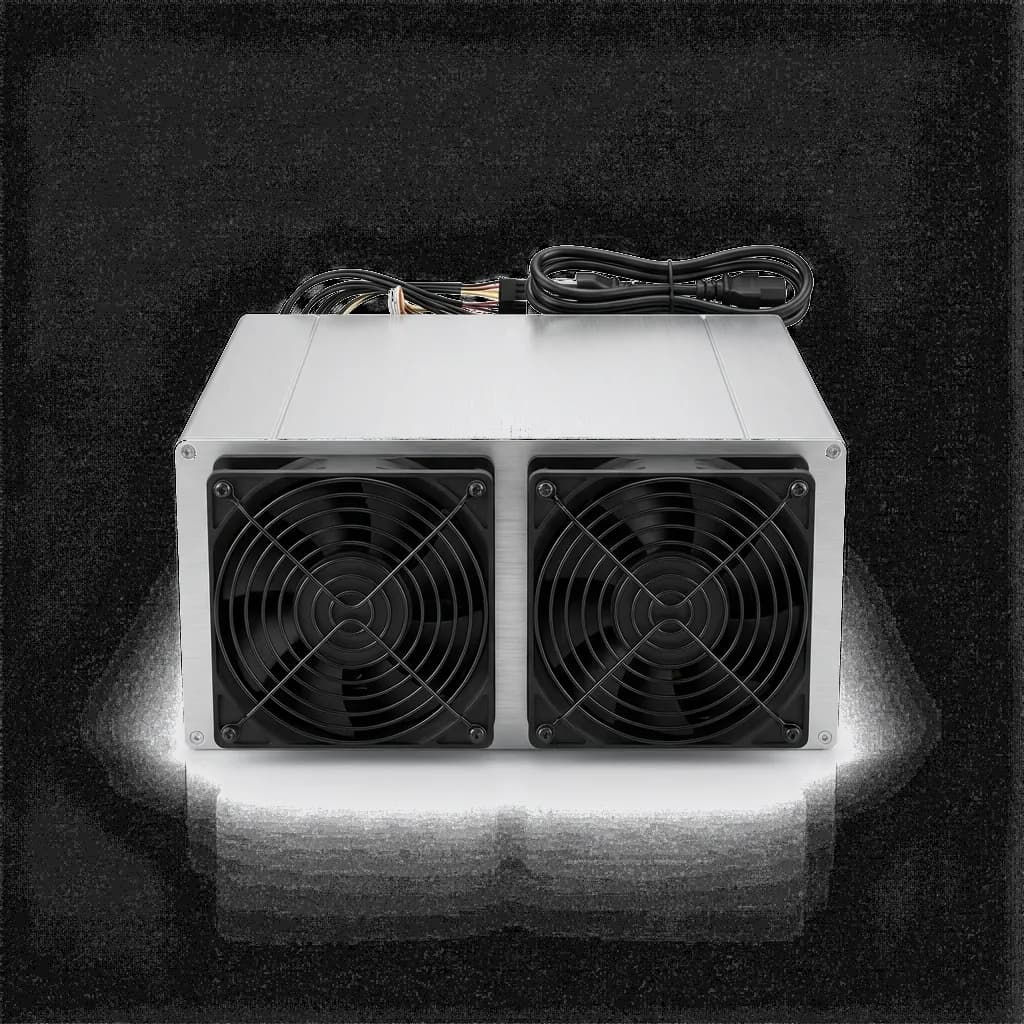
Mining today is done by ASICASICΟλοκληρωμένο κύκλωμα ειδικής εφαρμογής: ένα μηχάνημα φτιαγμένο για μία δουλειά, εδώ την εξόρυξη Bitcoin.Όλοι οι όροι στο γλωσσάριο machines: computers built to do this one job and nothing else. Their speed is measured in TH/sTH/sTerahash ανά δευτερόλεπτο: πόση δουλειά εξόρυξης κάνει ένα μηχάνημα. Περισσότερα TH/s = περισσότερο Bitcoin.Όλοι οι όροι στο γλωσσάριο, trillions of guesses a second. A current machine makes a few hundred trillion guesses a second and uses about as much power as several household air conditioners.
Because they draw so much power and give off so much heat, most machines run in hosting centres built for them, with their own power supply, cooling and staff who look after them.
Blocks, rewards and difficulty
- A block about every ten minutes. That is about 144 blocks a day.
- A reward for each block. The miner who finds it receives new bitcoin, 3.125 bitcoin since April 2024, plus the fees of the payments inside it.
- Difficulty keeps the pace. About every two weeks the network makes the race harder if blocks came too fast, or easier if they came too slowly. More machines joining means a harder race.
- The halvingHalvingΠερίπου κάθε τέσσερα χρόνια, το Bitcoin που πληρώνεται ανά μπλοκ μειώνεται στο μισό.Όλοι οι όροι στο γλωσσάριο. About every four years the reward per block is cut in half. The next one is expected around April 2028.
Why miners join pools
One machine on its own would wait many years, on average, to win a block. So miners join a poolPoolΜια ομάδα εξορυκτών που ενώνουν τη δουλειά τους και μοιράζονται τις ανταμοιβές, ώστε να πληρώνεστε σταθερά.Όλοι οι όροι στο γλωσσάριο: thousands of machines race together, and when the pool wins, it shares the reward by how much work each machine did. Most pools pay a steady amount every day for that work, minus a small fee.
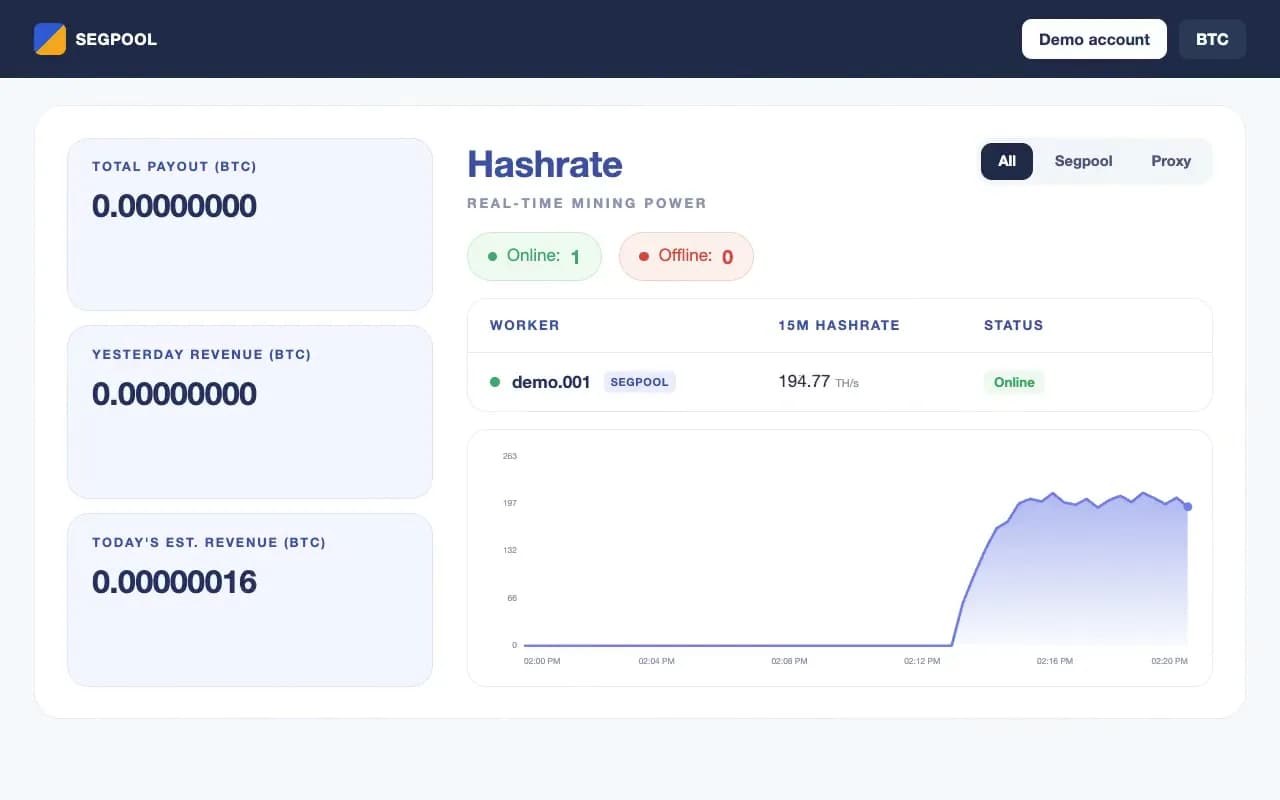
From machine to payout
- The machine runs in a hosting centre and makes guesses all day.
- The pool collects the work of thousands of machines and counts each one’s share.
- The network accepts a block when someone in the pool wins the race, about every ten minutes across the whole network.
- The reward of new bitcoin and fees goes to the pool, which credits every miner for their share of work.
- Your wallet receives your bitcoin once your balance passes the pool’s minimum payout.
On SegPool, Segments’ pool, payouts go straight to your own wallet: nobody in between holds your bitcoin. For more detail on how pools pay, read mining pools explained.
What decides how much you mine
- Speed. A faster machine wins a bigger share of the pool’s rewards.
- Efficiency. How much power the machine needs for its work, written as J/THJ/THJoule ανά terahash: πόση ενέργεια χρησιμοποιεί ένα μηχάνημα για τη δουλειά του. Χαμηλότερο = φθηνότερη λειτουργία.Όλοι οι όροι στο γλωσσάριο. Lower means a smaller power bill for the same bitcoin.
- Time running. A machine only earns while it mines, so power, cooling and quick repairs matter.
- The network. Rising difficultyΔυσκολίαΠόσο δύσκολο είναι να εξορυχθεί ένα μπλοκ. Αυξάνεται όσο περισσότερα μηχανήματα μπαίνουν στο δίκτυο.Όλοι οι όροι στο γλωσσάριο and the halving reduce the bitcoin each machine earns.
Mining sits inside a much bigger story about how new technology spreads. Read why the world changes every 50 years next.
Ερωτήσεις
- Is Bitcoin mining just solving puzzles?
- It is a guessing race. Machines try numbers until one fits the network’s rule. Winning proves the work was done, and that is what keeps the record safe.
- Can I mine bitcoin on my laptop or phone?
- Not in a useful way. Specialised ASIC machines are millions of times faster, so a laptop would almost never earn anything.
- How do I get paid?
- Your machine mines for a pool. The pool credits your share of its rewards and pays bitcoin to your own wallet once your balance passes its minimum payout.