LiveBTC$76,390Hashprice$0.032/TH/TagDifficulty148.4 THalvingin 525 TagenHosting-Plätze frei inF49,F48,F39+7 weitereStand 10:25 GST

Ertrag und Wirtschaftlichkeit

Low hashprice: how power tuning and curtailment protect mining margins

Segments research team · Aktualisiert am 3. November 2026 · 5 Min. Lesezeit

When hashprice is low, the power level a miner runs at matters as much as which miner you own. Running every machine flat out is not always the most valuable setting. Tuning a machine to a lower or higher power level, or pausing it, can protect the margin, especially on older hardware. For a hosted miner in the UAE on a fixed tariff, the main lever is usually efficiency tuning rather than hour-by-hour price chasing.

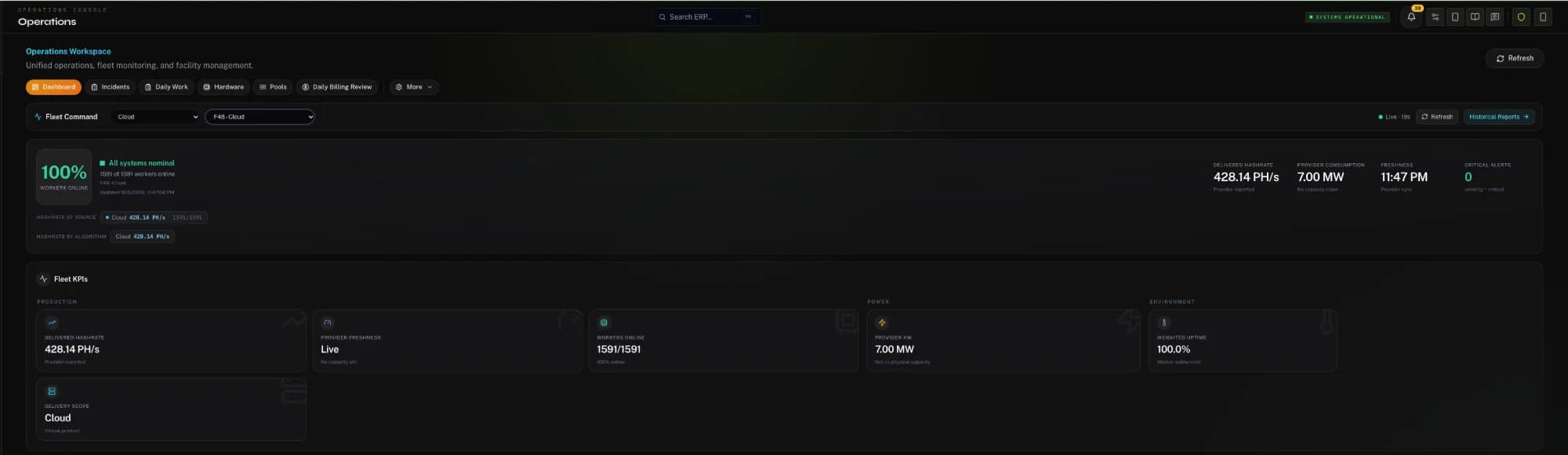
The operations console with fleet monitoring screens

Dieser Artikel ist auf Englisch.

What a low hashprice means for a hosted miner

Hashprice is the revenue a unit of hashrate earns per day. It moves with the bitcoin price, network difficulty and transaction fees. When it falls, each terahash your machine produces earns less, but the electricity it uses costs the same. The gap between those two lines is your margin, and a low hashprice narrows it.

Hashprice
$0.0324 pro TH/s und Tag
Netzwerk-Difficulty
148,4 T
Live-Werte, abgerufen 3. Nov., 10:25 Golfzeit

Recent commentary from the mining industry points out that 2026 has put real pressure on revenue per terahash. In that kind of market, small differences in efficiency and power cost decide how comfortable an operation is. If you want the background on how revenue recovers, see our piece on what a hashprice recovery means for buyers.

Hashprice (pro TH/s und Tag)

$0.0361

$0.0446$0.02753. Nov.: $0.04464. Nov.: $0.04295. Nov.: $0.04096. Nov.: $0.04197. Nov.: $0.04088. Nov.: $0.04169. Nov.: $0.041210. Nov.: $0.042211. Nov.: $0.042712. Nov.: $0.041816. Nov.: $0.039417. Nov.: $0.038918. Nov.: $0.038019. Nov.: $0.038420. Nov.: $0.037821. Nov.: $0.035722. Nov.: $0.035123. Nov.: $0.035024. Nov.: $0.035825. Nov.: $0.036426. Nov.: $0.036127. Nov.: $0.038128. Nov.: $0.038429. Nov.: $0.038330. Nov.: $0.03821. Dez.: $0.03812. Dez.: $0.03633. Dez.: $0.03854. Dez.: $0.03945. Dez.: $0.03886. Dez.: $0.03767. Dez.: $0.03768. Dez.: $0.03819. Dez.: $0.038210. Dez.: $0.039011. Dez.: $0.039012. Dez.: $0.039213. Dez.: $0.038314. Dez.: $0.038315. Dez.: $0.037416. Dez.: $0.036717. Dez.: $0.037318. Dez.: $0.036519. Dez.: $0.036320. Dez.: $0.037421. Dez.: $0.037522. Dez.: $0.037623. Dez.: $0.037524. Dez.: $0.037125. Dez.: $0.037226. Dez.: $0.037027. Dez.: $0.037028. Dez.: $0.037229. Dez.: $0.037230. Dez.: $0.036931. Dez.: $0.03751. Jan.: $0.03712. Jan.: $0.03763. Jan.: $0.03814. Jan.: $0.03845. Jan.: $0.03886. Jan.: $0.03987. Jan.: $0.03978. Jan.: $0.03909. Jan.: $0.039110. Jan.: $0.038811. Jan.: $0.038812. Jan.: $0.039013. Jan.: $0.039114. Jan.: $0.040915. Jan.: $0.041616. Jan.: $0.041017. Jan.: $0.041018. Jan.: $0.040819. Jan.: $0.040220. Jan.: $0.039721. Jan.: $0.037922. Jan.: $0.038623. Jan.: $0.039724. Jan.: $0.039725. Jan.: $0.039526. Jan.: $0.038427. Jan.: $0.039228. Jan.: $0.039529. Jan.: $0.039630. Jan.: $0.037531. Jan.: $0.03731. Feb.: $0.03492. Feb.: $0.03413. Feb.: $0.03494. Feb.: $0.03365. Feb.: $0.03246. Feb.: $0.02797. Feb.: $0.03288. Feb.: $0.03469. Feb.: $0.035110. Feb.: $0.035011. Feb.: $0.034412. Feb.: $0.033513. Feb.: $0.033114. Feb.: $0.034415. Feb.: $0.034816. Feb.: $0.034417. Feb.: $0.034418. Feb.: $0.033719. Feb.: $0.032320. Feb.: $0.029121. Feb.: $0.029622. Feb.: $0.029623. Feb.: $0.029424. Feb.: $0.028125. Feb.: $0.027926. Feb.: $0.029627. Feb.: $0.029428. Feb.: $0.02871. März: $0.02922. März: $0.02863. März: $0.02994. März: $0.02975. März: $0.03166. März: $0.03077. März: $0.02958. März: $0.02929. März: $0.028610. März: $0.029711. März: $0.030312. März: $0.030413. März: $0.030614. März: $0.030815. März: $0.030916. März: $0.031617. März: $0.032418. März: $0.032019. März: $0.030920. März: $0.030521. März: $0.033122. März: $0.032423. März: $0.031924. März: $0.033325. März: $0.033126. März: $0.033527. März: $0.032328. März: $0.031229. März: $0.031230. März: $0.031031. März: $0.03131. Apr.: $0.03212. Apr.: $0.03203. Apr.: $0.03074. Apr.: $0.03035. Apr.: $0.03046. Apr.: $0.03127. Apr.: $0.03118. Apr.: $0.03259. Apr.: $0.032210. Apr.: $0.032511. Apr.: $0.033012. Apr.: $0.033113. Apr.: $0.032014. Apr.: $0.033715. Apr.: $0.033616. Apr.: $0.033817. Apr.: $0.034218. Apr.: $0.035819. Apr.: $0.035120. Apr.: $0.034221. Apr.: $0.035222. Apr.: $0.035423. Apr.: $0.036324. Apr.: $0.036325. Apr.: $0.035926. Apr.: $0.036027. Apr.: $0.036528. Apr.: $0.035929. Apr.: $0.035430. Apr.: $0.03511. Mai: $0.03542. Mai: $0.03703. Mai: $0.03734. Mai: $0.03735. Mai: $0.03796. Mai: $0.03847. Mai: $0.03868. Mai: $0.03809. Mai: $0.038110. Mai: $0.038311. Mai: $0.039012. Mai: $0.038813. Mai: $0.038214. Mai: $0.037615. Mai: $0.038116. Mai: $0.036417. Mai: $0.036018. Mai: $0.035619. Mai: $0.035420. Mai: $0.035321. Mai: $0.035622. Mai: $0.035723. Mai: $0.034724. Mai: $0.035325. Mai: $0.035426. Mai: $0.035627. Mai: $0.034928. Mai: $0.034229. Mai: $0.033530. Mai: $0.033231. Mai: $0.03341. Juni: $0.03332. Juni: $0.03233. Juni: $0.03024. Juni: $0.02905. Juni: $0.02896. Juni: $0.02767. Juni: $0.02758. Juni: $0.02869. Juni: $0.028510. Juni: $0.027911. Juni: $0.027812. Juni: $0.028713. Juni: $0.028714. Juni: $0.032415. Juni: $0.033116. Juni: $0.033417. Juni: $0.033018. Juni: $0.032419. Juni: $0.031720. Juni: $0.031921. Juni: $0.032322. Juni: $0.031823. Juni: $0.032224. Juni: $0.031525. Juni: $0.030726. Juni: $0.030027. Juni: $0.028328. Juni: $0.028129. Juni: $0.027930. Juni: $0.02821. Juli: $0.02752. Juli: $0.02823. Juli: $0.02894. Juli: $0.02945. Juli: $0.02966. Juli: $0.02997. Juli: $0.03018. Juli: $0.02979. Juli: $0.029210. Juli: $0.029711. Juli: $0.030512. Juli: $0.031513. Juli: $0.031514. Juli: $0.030815. Juli: $0.032116. Juli: $0.032017. Juli: $0.031518. Juli: $0.031619. Juli: $0.032020. Juli: $0.032021. Juli: $0.032222. Juli: $0.032923. Juli: $0.032724. Juli: $0.032225. Juli: $0.031726. Juli: $0.032027. Juli: $0.032528. Juli: $0.031729. Juli: $0.031830. Juli: $0.031831. Juli: $0.03221. Aug.: $0.03132. Aug.: $0.03133. Aug.: $0.03164. Aug.: $0.03165. Aug.: $0.03196. Aug.: $0.03227. Aug.: $0.03208. Aug.: $0.03239. Aug.: $0.032010. Aug.: $0.032011. Aug.: $0.031512. Aug.: $0.031313. Aug.: $0.031314. Aug.: $0.031315. Aug.: $0.031116. Aug.: $0.031117. Aug.: $0.031018. Aug.: $0.031819. Aug.: $0.031920. Aug.: $0.034221. Aug.: $0.036022. Aug.: $0.038623. Aug.: $0.038524. Aug.: $0.038825. Aug.: $0.039526. Aug.: $0.039227. Aug.: $0.039528. Aug.: $0.040129. Aug.: $0.038930. Aug.: $0.039131. Aug.: $0.03881. Sept.: $0.03932. Sept.: $0.03873. Sept.: $0.03864. Sept.: $0.04065. Sept.: $0.03976. Sept.: $0.03947. Sept.: $0.03968. Sept.: $0.03909. Sept.: $0.038710. Sept.: $0.038611. Sept.: $0.037812. Sept.: $0.038113. Sept.: $0.038114. Sept.: $0.037915. Sept.: $0.038616. Sept.: $0.037317. Sept.: $0.037618. Sept.: $0.037719. Sept.: $0.038920. Sept.: $0.038521. Sept.: $0.038422. Sept.: $0.041023. Sept.: $0.040824. Sept.: $0.040025. Sept.: $0.040026. Sept.: $0.039827. Sept.: $0.040028. Sept.: $0.040029. Sept.: $0.039530. Sept.: $0.03961. Okt.: $0.03962. Okt.: $0.04023. Okt.: $0.04004. Okt.: $0.04015. Okt.: $0.04106. Okt.: $0.04067. Okt.: $0.04058. Okt.: $0.03959. Okt.: $0.038710. Okt.: $0.039111. Okt.: $0.039312. Okt.: $0.039613. Okt.: $0.038714. Okt.: $0.039415. Okt.: $0.038616. Okt.: $0.037817. Okt.: $0.036418. Okt.: $0.036419. Okt.: $0.036720. Okt.: $0.036621. Okt.: $0.037122. Okt.: $0.037623. Okt.: $0.036424. Okt.: $0.036325. Okt.: $0.036126. Okt.: $0.035827. Okt.: $0.035828. Okt.: $0.03613. Nov.28. Okt.
Hashprice over the last 12 months, drawn from live data.Blockchain.com, täglich, bis 28. Okt.

Beyond on or off: tuning the power level

Classic curtailment treats a miner as a switch. When power gets expensive, machines are turned off. When it gets cheaper, they come back on. That works, but it ignores the range of settings in between.

Modern firmware lets a miner run at different power targets. Lower power usually means less hashrate but better efficiency, so each terahash costs less electricity. Higher power gives more hashrate at a worse efficiency. The article that prompted this piece argues that the aim is not maximum hashrate or maximum uptime but to maximise the value of "every megawatt consumed".

In plain terms, the useful sum for any setting is simple: what the machine earns from its power, minus what that power costs, multiplied by how much power it draws. The setting that gives the largest result wins. Sometimes that is full power, sometimes an underclocked profile, and sometimes a pause.

  • Overclock when power is cheap and the extra hashrate earns more than the extra electricity costs.
  • Underclock when margins tighten, so the machine works at a more efficient point.
  • Pause only when no setting leaves a positive margin.

Why a fixed tariff changes the picture in the UAE

Much of the published work on dynamic power management comes from markets such as Texas, where wholesale electricity prices swing from hour to hour. There, software can follow day-ahead prices and switch fleets between profiles through the day. The source itself notes that sites on fixed-price power contracts may capture less value from that hourly optimisation.

Hosting in the UAE is usually billed at an agreed rate rather than a wholesale hourly price. That means hour-by-hour price chasing has less to work with. What still matters is the efficiency point each machine runs at, and whether that point suits today's hashprice. Our guide to the mining hosting bill explains how power is charged.

Uptime at any hosting centre is a target, not a promise. Deliberate tuning or pausing is a different thing from unplanned downtime, so it helps to agree up front how each is recorded and reported.

Older and newer machines respond differently

Not every machine in a fleet has the same efficiency curve. An older model uses more energy per terahash, so its margin narrows sooner as hashprice falls. A newer model keeps a healthy margin across a wider range of conditions.

The modelling in the source found that older hardware gained the most in percentage terms from adaptive power settings, while newer hardware gained more in absolute terms because it started from a stronger base. The lesson for a buyer is not that older machines become as good as new ones. It is that each model deserves its own settings, rather than one rule for the whole fleet.

Bitmain Antminer S21 XP (270TH)

270 TH · 13.5 J/TH

Heutiger Preis

$4,015

Miner ansehen

Antminer S23hyd (563T)

563 TH · 9.8 J/TH

Heutiger Preis

$16,950

Miner ansehen

If you are comparing machines, efficiency is the figure to watch closely. Our note on checking your rig's efficiency walks through how to read it.

Questions to ask your host

Tuning only helps if someone sets it up carefully and watches the results. Before changing anything, it is worth asking your host a few direct questions.

  1. Can my machines run custom power profiles, and who sets and monitors them?
  2. Which firmware is used, and what does it mean for any cover I have from the seller?
  3. How is a planned pause or underclock shown in my reports, compared with a fault?
  4. How does tuning affect fan speed, heat and wear in the hall?
  5. Will I see hashrate and power readings for each machine, not just the fleet?
Operations console with fleet monitoring screens
Fleet monitoring makes it possible to see how each machine performs at its chosen power setting.

What this means for buyers

When hashprice is low, the calm response is to look at what you can control. You cannot set the bitcoin price or the network difficulty. You can choose an efficient machine, agree a clear power arrangement and make sure each unit runs at a sensible setting for current conditions. These are small decisions, but in a tight market they add up.

Fragen

What is curtailment in bitcoin mining?
Curtailment means reducing or stopping a miner's power use for a period, usually because electricity is expensive relative to what the machine earns. Traditional curtailment simply switches machines off. Newer approaches also lower the power level instead of stopping completely.
Does underclocking a miner make sense when hashprice is low?
It can. Running a miner at a lower power target usually improves its efficiency, so each terahash uses less electricity. You give up some hashrate, but the margin on what remains can be better. The right setting depends on the machine, its firmware and your power cost.
Is hourly power optimisation useful for miners hosted in the UAE?
Less so than in markets with hourly wholesale prices. UAE hosting is usually billed at an agreed rate, so the main lever is choosing an efficient operating point for each machine rather than following hour-by-hour price swings.
Will tuning affect my uptime figures?
It depends on how your host reports it. A planned pause or underclock is not the same as a fault, so agree in advance how each is recorded. Uptime is a target your host works towards, not a promise.
Quellen

  1. When Hashprice Falls Below $40, Smarter Mining Becomes a Competitive Advantage · The Bitcoin Mining Block Post (Nico Smid), 2026-10-22

Segments research team · Mining operations, hosting and hardware specialists at Segments in Dubai

Weiterlesen